Pip: Siân Alison has been sending us somewhere we probably shouldn’t go — ruined villages, Gothic castles, and Soviet Arctic settlements. Standard November itinerary, really.
Mara: This episode covers two territories: the abandoned places across Europe where history literally stopped, and the Gothic landmarks that November’s fog and short days make genuinely worth visiting.
Pip: Let’s start with the places that time forgot.
Abandoned Places and Forgotten Settlements
Mara: The question here is what draws us to places people left behind — and what those places still have to say.
Pip: The post puts it plainly: “Empty streets, crumbling buildings and homes left behind offer a glimpse into another time, often leaving more questions than answers.”
Mara: That tension — preservation versus ruin — runs through every site. Oradour-sur-Glane in France wasn’t rebuilt after the 1944 Nazi SS massacre of 642 people; it was kept exactly as it was, as a permanent memorial.
Pip: Craco in Italy and Belchite in Spain show the other registers — landslides and civil war, respectively. Belchite was so damaged in 1937 that a whole new town was built next to it. And then there’s Pyramiden in Svalbard, a Soviet mining settlement abandoned in 1998, sitting under a pyramid-shaped mountain in the Arctic with its cultural centre still standing.
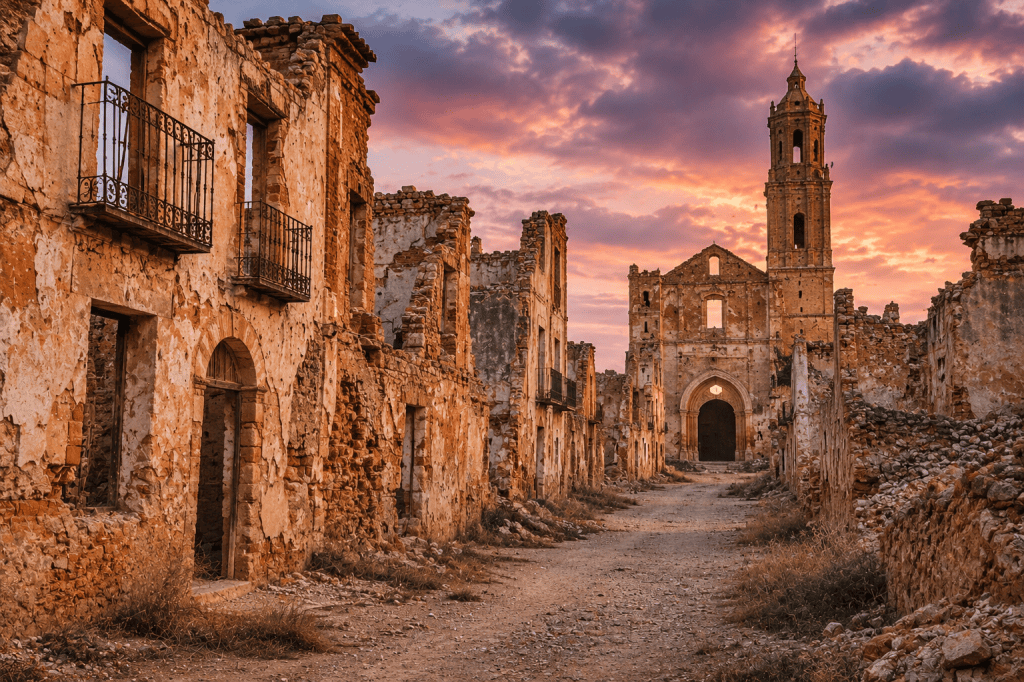
Belchite-Spain
Mara: Tyneham in Dorset is the quietly devastating one — residents were told to leave in 1943 for D-Day military training and simply never allowed back.
Pip: Gothic landmarks are a natural next stop from here — different kind of haunting, but same instinct.
Gothic Landmarks in November
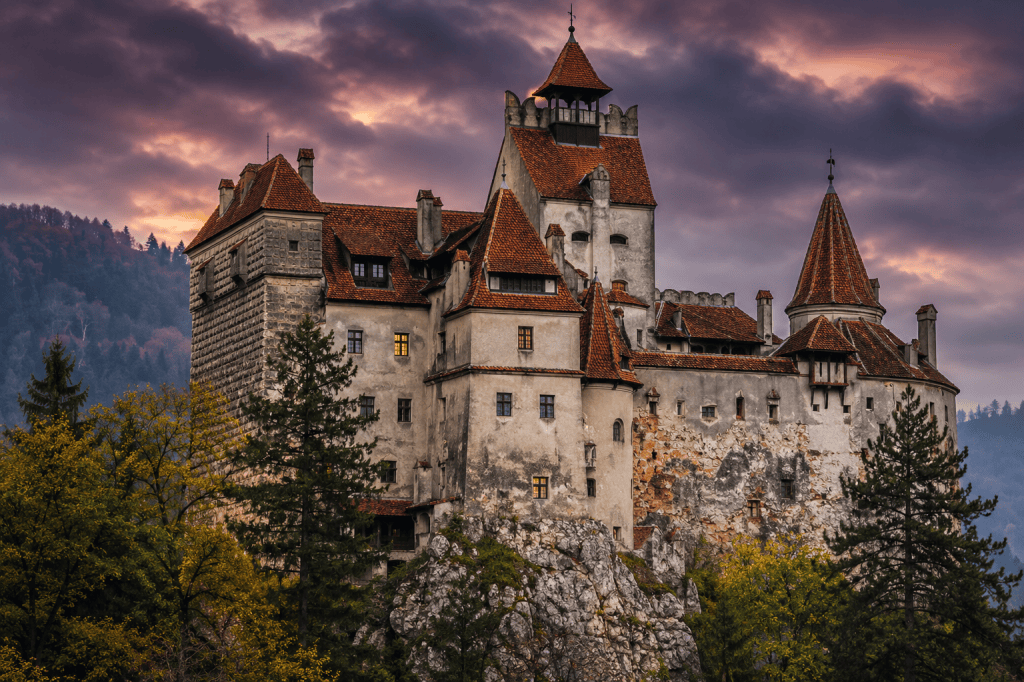
Bran Castle- Romania
Mara: The argument in the Gothic landmarks post is that November isn’t a drawback for visiting these sites — it’s actually the point. Darker evenings and foggy landscapes are the backdrop these places were built for.
Pip: That reframe earns its keep. Most travel writing tells you to visit somewhere despite the weather. This one says the weather is the whole reason.
Mara: The post describes Whitby Abbey as a place where “atmospheric medieval ruins have inspired legends, ghost stories and even Bram Stoker’s Dracula” — and notes that November brings a quieter atmosphere, making it ideal for exploring the ruins and the coastal scenery.
Pip: Quieter than what, exactly — the ghost-story peak season?
Mara: Bran Castle in Romania gets the same Dracula association, though the post is careful to note its connection to Stoker’s vampire is “largely a product of later popular culture” — the castle has its own history worth knowing. Quinta da Regaleira in Sintra goes further into the fantastical: hidden passageways, underground tunnels, and a spiral staircase called the Initiation Well descending deep into the earth.
Pip: St Vitus Cathedral in Prague started construction in 1344 and wasn’t finished until 1929 — nearly six centuries of building, which puts most renovation projects in perspective.
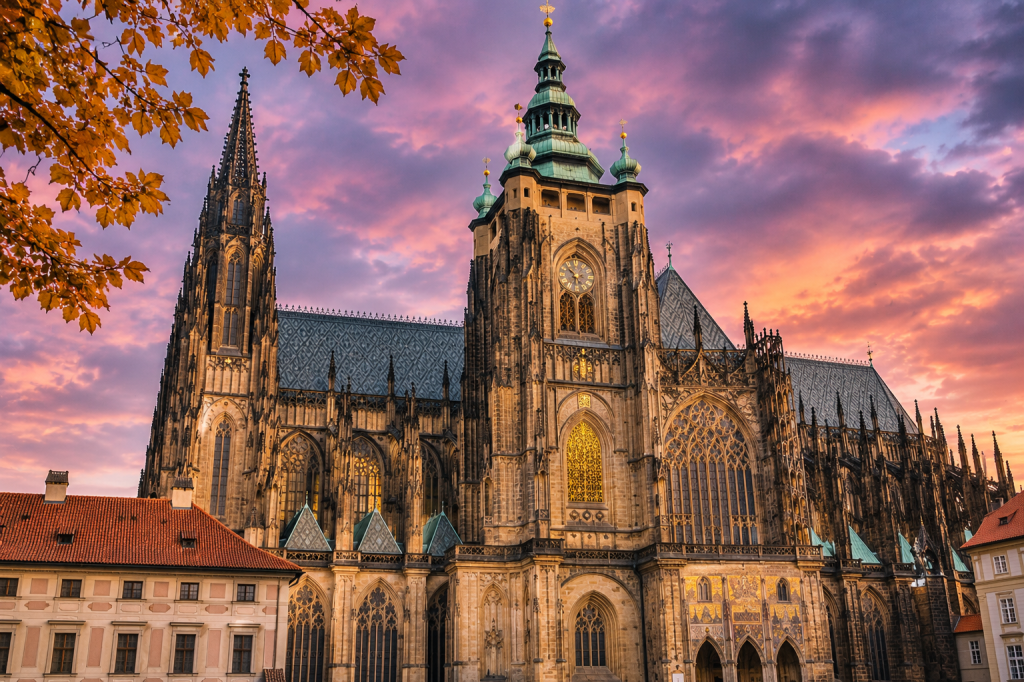
St Vitus Cathedral in Prague
Mara: Cologne Cathedral matches that scale. Construction began in 1248, completed in 1880, and the post points out that November visits overlap with the start of the Christmas markets — so Gothic stonework and mulled wine are apparently compatible.
Pip: The through-line across all five is that Gothic architecture rewards low light and empty squares. November delivers both.
Mara: What connects all of this is the same instinct — that the places most worth visiting are the ones with something unresolved still visible in them.
Pip: History you can walk through rather than read about. More of that next time.


Leave a Reply