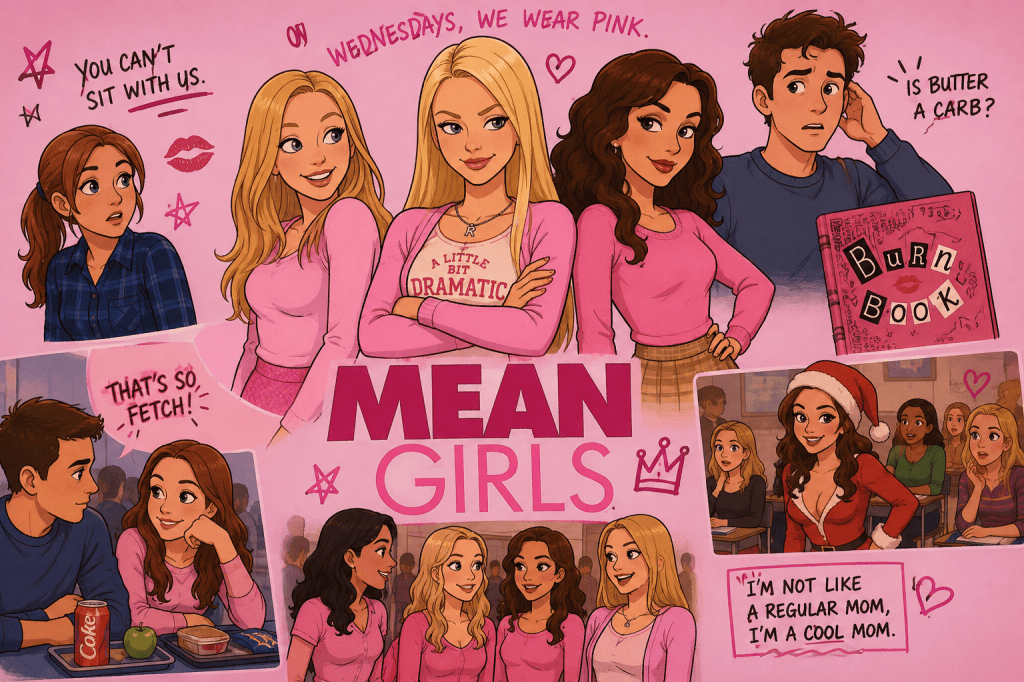
On Wednesdays, we wear pink.
Mean Girls has become far more than a teen comedy. The film quotes are still repeated online, its characters remain instantly recognisable, and every October 3rd social media fills with references to one of the most quotable films of the 2000s. Many comedies lose their appeal or age badly as trends and times change but Mean Girls did the opposite.
The movie was released in 2004, and it captured something far bigger than high school gossip. Underneath all the humour was a surprisingly clever observation about popularity, identity and the invisible rules that often shape female friendships. Two decades later, those themes feel just as familiar and relevant today.
Popularity Has Changed (but not really)
Today’s teenagers seem to live in a completely different world. Instead of passing handwritten notes in class, they have online group chats and in place of school rumours spreading through corridors, gossip can travel across social media in a matter minutes or seconds.
One thing that hasn’t changed is the desire to belong and neither has the fear of exclusion. The social hierarchies and rules that the film explored still exist, but they’ve simply moved online.
We All Know a Regina George
One reason the film has stood the test of time is because the characters feel universal. Most people can remember the confident leader, the loyal friend, the people-pleaser or the person desperately trying to fit in. Even if your school wasn’t divided into “The Plastics” and everyone else, chances are you recognised those social dynamics and perhaps fitted into a certain clique at school.
The film is timeless because it understood teenage insecurity very well and despite the comedy elements, Mean Girls understood something many teen films overlooked, that growing up often means trying to figure out who you are while simultaneously worrying about what everyone else thinks. Cady Heron’s journey isn’t simply about becoming popular. It’s about losing herself in the process. It’s a lesson that still resonates long after leaving school.
Female Friendship Is Complicated
The film refuses to pretend that female friendships are either perfect or hopelessly toxic. It however shows that loyalty, jealousy, admiration and competition can exist at the same time. The emotional complexity feels surprisingly honest whilst watching as an adult. The same patterns can also be seen in the workplace or various groups in all walks of life, bullying doesn’t stop when you leave high school, it often continues into adulthood.
The Film Predicted the Social Media Era
The most remarkable thing about Mean Girls is that it arrived before Instagram, TikTok or Snapchat but many of its themes now feel even more relevant today. The Burn Book may have been passed around school rather than posted online, but public humiliation, gossip and peer pressure have not disappeared. If anything, technology and social media has amplified them. Watching the film today, it’s interesting to wonder how different or similar the story would look today in 2026 in the age of social media.
It Never Forgot to Be Funny
Despite all its observations about identity and belonging, Mean Girls remains genuinely funny. Its one-liners have entered popular culture because they’re clever, memorable and endlessly quotable. There are very few films have produced so many phrases that people still use in everyday conversation more than twenty years later. It’s easy to dismiss Mean Girls as a light-hearted high school comedy but its lasting popularity comes from understanding something universal.
Everyone has wanted to fit in or worried about what other people think. At some point many of us have tried to become someone else in order to belong.
That’s why Mean Girls still feels so relevant. The hairstyles, flip phones and fashion may belong to the early 2000s but everything else about this cult movie still feels very familiar and modern.
Siân Alison- Loosely related to ‘Staying In is the New Going Out’ Covering Millennials and 2000s Pop Culture


Leave a Reply