The Rise of the Amateur Millennial Food Scientist at Home
Molecular gastronomy used to belong almost exclusively to elite/fancy restaurants. This culinary technique was behind the doors of expensive tasting menus and television cooking competitions where chefs transformed olive oil into powder, served cocktails trapped in a smoke-filled dome and turned balsamic vinegar dressing into delicate edible pearls. Molecular Gastronomy is part chemistry lab and part culinary theatre. It’s now showing up at dinner parties hosted by millennials in small apartments with Pinterest boards, Bluetooth speakers and a budget smoke gun bought online.
The rise of the amateur millennial food scientist says a lot about how younger generations approach food, creativity and socialising. Cooking is no longer just about feeding people. It’s now about creating experiences at home for your guests. The modern dinner party is immersive, playful and performative in ways previous generations might never have imagined. One course smokes under a glass cloche, another might change colour dramatically when citrus is added. A dessert may arrive with crackling candy or edible gold. Almost certainly someone is filming the reveal and experience for Instagram. This all makes perfect sense for millennials and shows how modern hosting has changed since the 1970s and 1980s.
This is the generation that grew up watching food transform into entertainment. Celebrity chefs became household names during the 1990s and early 2000s, while shows like MasterChef, Ready Steady Cook, Heston Blumenthal and The Great British Bake Off turned cooking into spectacle. Food stopped being purely practical and became aspirational and artistic. Social media accelerated this shift even further. Suddenly, meals weren’t just eaten around the family dinner table, they were photographed, presented and shared.
Millennials have a difficult and different economic landscape compared to older generations. Nights out became more expensive and housing became smaller. Many traditional adult milestones arrived later than expected or not at all. Entertaining at home evolved from a budget-friendly alternative into a lifestyle choice. Staying in became its own form of social culture. Hosting at home transformed into a creative and affordable outlet combining impressive table decorations, storytelling, food presentation, cocktails and personality into a single event. A casual dinner with friends could become a themed evening, an activity or a charcuterie board design project.
Molecular gastronomy fits perfectly into this shift because it turns food into interaction. It adds surprise and novelty to an evening in a way that feels memorable and playful.
Much of adult life can feel repetitive and stressful, particularly in a modern world of constant notifications, anxiety, burnout and digital exhaustion. Experimental cooking like easy molecular gastronomy offers something tactile and imaginative. It feels closer to art class or a science experiment than a chore. The amateur food scientist movement is less about fine dining and more about controlled chaos.
Unlike traditional cooking or baking, molecular gastronomy tends to reject perfection, the goal isn’t to recreate a complicated Michelin-starred tasting menu. It’s to create moments that excite your guests. For example, colour-changing cocktails, flavoured foams, edible bubbles, deconstructed desserts or tiny shot glass courses are often used less to impress and more to entertain.
Millennials in particular are drawn to food that reconnects them with childhood comfort, but with an updated, unexpected twist. Experimental hosting allows familiar foods to become theatrical. Tomato soup might arrive as tiny gel spheres on a deep spoon or a childhood birthday cake flavour might appear inside a cocktail glass. A fried egg dessert can mess with your perception, it may look savoury but it’s actually made with panna cotta and peaches. Dishes are re reinvented with adult presentation and unexpected textures and flavours.
Millennials are good at taking something traditionally exclusive and making it accessible and different. Molecular gastronomy once carried an intimidating reputation. It was associated with expensive restaurants, complicated equipment, and chefs using language most people barely understood. But social media, online tutorials and affordable kitchen gadgets have have made this fun style of cooking easier to do at home. You no longer need a restaurant laboratory to experiment with food science at home, you actually just need curiosity and internet access.
Social media has accelerated this style by showing you easy techniques that once seemed impossible can now be learned in under sixty seconds. Millennials are a generation partly raised online so they are comfortable learning visually, independently and find joy in experimenting with molecular gastronomy and sharing online their successes and failures. Cooking no longer feels like a skill reserved for professionals, it’s something everyone can participate in.
For previous generations, dinner parties often carried an undercurrent of pressure. and formal home hosting prioritised perfection, etiquette and presentation. Millennial hosting tends to value atmosphere and connection with others over precision. Guests are encouraged to interact, laugh and to participate. A slightly messy cocktail foam or uneven sphere can actually add to the charm because it feels personal and homemade rather than intimidatingly polished. The result is a style of entertaining that sits somewhere between dinner party, themed party and theatre production This also reflects a wider cultural shift toward Millennial living, this generation prioritises food and social experiences. Elaborate hosting offers a relatively affordable way to create memorable social moments on a budget. A themed dinner party can feel immersive and escapist in a way ordinary socialising at a busy bar sometimes doesn’t.
For introverted or home-oriented millennials, this trend carries another appeal as it creates structured social interaction. This style of home hosting gives people a shared focus, the evening revolves around courses, reveals, games, textures or themes rather than the pressure of constant conversation. In that sense, experimental dining becomes a social tool as much as a culinary one.
Traditional ideas of adulthood often centred around stability, practicality and seriousness. Many millennials are embracing something softer and more expressive. They are building identities around creativity, comfort, nostalgia and social connection with loved ones in their own home. Their homes are extensions of personality and using easy molecular gastronomy style hosting at home brings people together and makes ordinary evenings feel more special and memorable. In a world increasingly lived through screens, turning your kitchen into a tiny science lab is perhaps one of the most human things you can do.
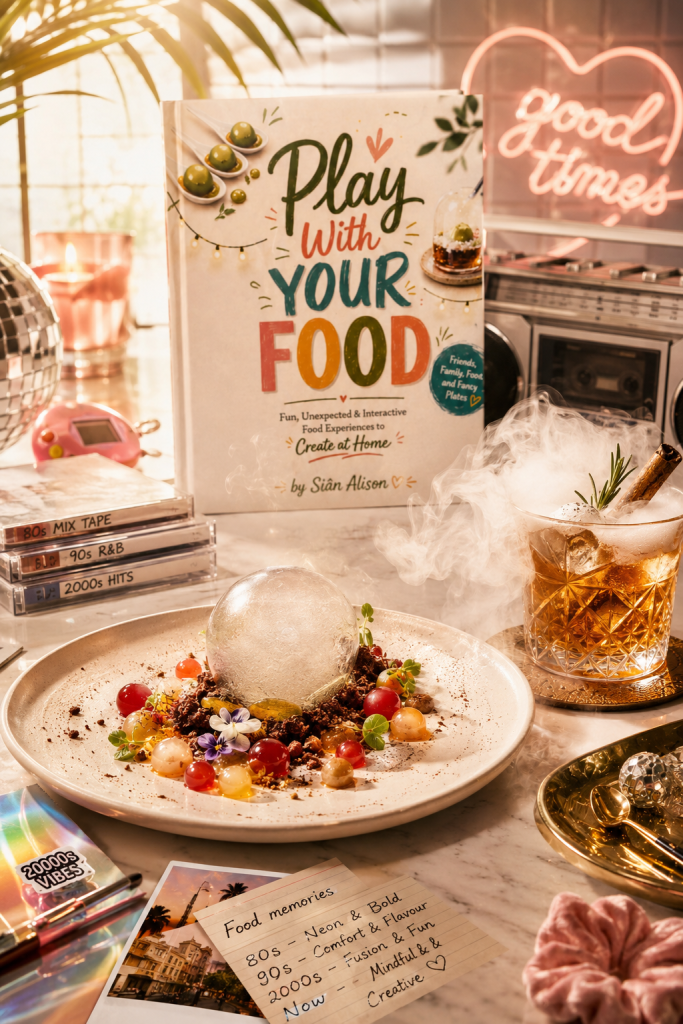
Article is related to ‘Play With Your Food’ Siân Alison
Enjoyed this article? 😊
Thanks for reading! If you’d like to discover more of my books then click the link to browse below👇


Leave a Reply